

Returning Home

We had just returned from Missouri. It had been a miserable trip with oppressive heat and the constant, headache-inducing smell of car exhaust. This was 1973, and half the cars on the road were burning oil. Back then, all exhaust had a color, a palette of wispy white to bluish gray — the latter color indicating oil had entered the combustion chamber. This bluish exhaust was accompanied by an acrid aroma that could be smelled for miles, noxious fumes far worse than those in the bathroom after my dad ate a half gallon of Neopolitan ice cream. Lactose intolerance — not a recognized affliction in the 70s. We just thought all dads were this gross.
It was difficult to sleep on these long road trips, especially when traveling through Indiana — Gary, in particular. As exhaust from our station wagon wafted in through the back window, it co-mingled with the rotting eggs smell of the steel mills that butted up to the highway. Unfortunately, it was always in this corridor that traffic came to a dead stop, sometimes for an hour. And on this particular August day, it was over 95° (probably 105° in the cramped confines of our car). Rolling up the windows — not an option as air conditioning wasn’t a standard feature on most cars, and certainly not in the cheap, used vehicles my father favored.
After passing through Gary, it took more than an hour of driving with all windows down to flush out the car with fresh air, and two hours later, we were finally, thank god, back in Battle Creek. I felt a wave of relief when we hit that downtown exit ramp. As if by magic, my head cleared and I could think again, and in my revived lucidity, I found myself ravenously hungry, as was my little brother. My baby sister was still on jarred toddler food and had more than she needed, so I shared bites of her mini hot dogs with Ben as I fed her in the backseat. Besides that wee bit of food, my brother and I had not eaten since 1:30 p.m., and here it was 8:30, though it had really only been six hours since our last meal, as we’d just crossed into Eastern Standard Time. Boredom had a way of focusing all of our attention on our empty stomachs, and we were ready to eat anything, even the horrible, tasteless food at Howard Johnson’s in Benton Harbor or more graham crackers and boxes of Sunmaid raisins. Anything, please, and water.
Crossing the Michigan-Indiana border also meant we were now an hour past our hard and fast bedtime of 7:30 p.m. Yes, my stepmother thought this was when all 10-year-olds should be sleeping, even in the summer when there was no school, and even when all the other kids in the neighborhood were outside playing hide and seek until dark. This far north, darkness didn’t arrive until nearly 10:00 p.m., and since I couldn’t sleep while it was still light, I lay awake in bed every single summer night for nearly two and a half hours. It was torture. I would count the cottage cheesy bumps of the plaster on the ceiling and try doing as many situps as possible (perhaps I would beat Cindy Roddy in situps next school year). I would try counting to 5000, but never got beyond 2116. It was just too dull, I would lose my concentration. Sometimes I would hide a notepad and pencil under my pillow and draw pictures of horses and Olga Korbut on the balance beam. It took talent and patience to draw a realistic picture of a horse and I was pretty damn good at it, if I do say so myself. And some nights, especially after reading my stepmother’s copy of Fear of Flying, I would dig for clams, if you catch my drift. That was a great way to while away the hours.
It was like this every summer, dare I say even into high school — my brother and I were the only kids left out of the evening fun. And beyond making us incredibly sad, it was embarrassing. How were we to explain that to our friends, my stepmother’s reasoning? If there was any, it was beyond my comprehension. We lived in a city —there were no cows to milk or pigs to feed at the crack of dawn. Ours was a crime-free neighborhood with a plethora of grannies who left their doors unlocked day and night. We left our doors unlocked day and night.
No matter how much I begged, my stepmother would not budge. It didn’t matter if there was a sleepover, or a concert in the park, fireworks, relatives visiting, or even if the Born Free series was playing on TV. Everyone was watching Born Free, except us. Ditto for the Miss America Pageant, Archie Bunker, Columbo, Sonny and Cher, and Star Trek. We missed all of it. If a thing took place after 7:30 p.m., my brother and I were simply out of luck. At 7:30, we were to have our teeth brushed, jammies on, in bed, and under the covers. And I was to help get my tiny sister in order, as well. And to read her books. There were no exceptions. Ever.
Discreetly, my friends tried to include me in their nighttime summer schenanigans, sometimes hiding under my open window, relaying the pranks they’d played on the Dearings and Van Winkles and anyone else who deserved them. I was dying. Pranks were my specialty. During the day, I was the ringleader. At school, I was the class clown. But on these long summer nights, I was just a spectator with nosebleed seats.
Eventually, I figured out to hide a Nancy Drew book and my transistor radio between the mattress and box spring, along with the class picture of my favorite boy in school, Vance. There was always something interesting to listen to — American Top 40, Bob Sirott on WLS, Word Jazz with Ken Nordine, or Radio Mystery Theater. Sophisticated (i.e. “old fogey”) stuff for a ten-year-old, yes, but nothing else was on in the evening, at least on the radio. And thanks to the mono earpiece from my grandma, no one was aware of my nearly-every-night radio routine. Pretty sure that’s why GG gave it to me — she was on to my stepmother and her strict ways. She also secretly gave me a stuffed dog to cuddle. During the day, I hid him under my bed, which conveniently had a dust ruffle. Stuffed animals, real animals — also not allowed in our house. They cluttered things up, they pooped. No way.
Since I was the one to make all the beds in the morning, as well as outfitting them with clean sheets every few weeks, there was no chance anyone would discover my secret stash of nightly amusements, which in addition to the radio included Nancy Drew and the Hardy Boys, Bram Stoker’s “Dracula,” anything by Stephen King and “Are You There God, It’s Me, Margaret” (which is now sadly banned in most red states). I was never short on books, thanks to our excellent public library and Sally Coash, my friend Kit’s mom. Some evenings, when I was feeling especially romantic, I would just stare at my picture of Vance, imagining how his lips would feel on mine — soft and warm. Sadly, a real kiss never transpired (I was only 10), and I would soon learn that my best friend, Rose, had actually kissed Vance, though I’m not sure it really counts when it’s underwater at the pool at the YMCA. I was devastated.
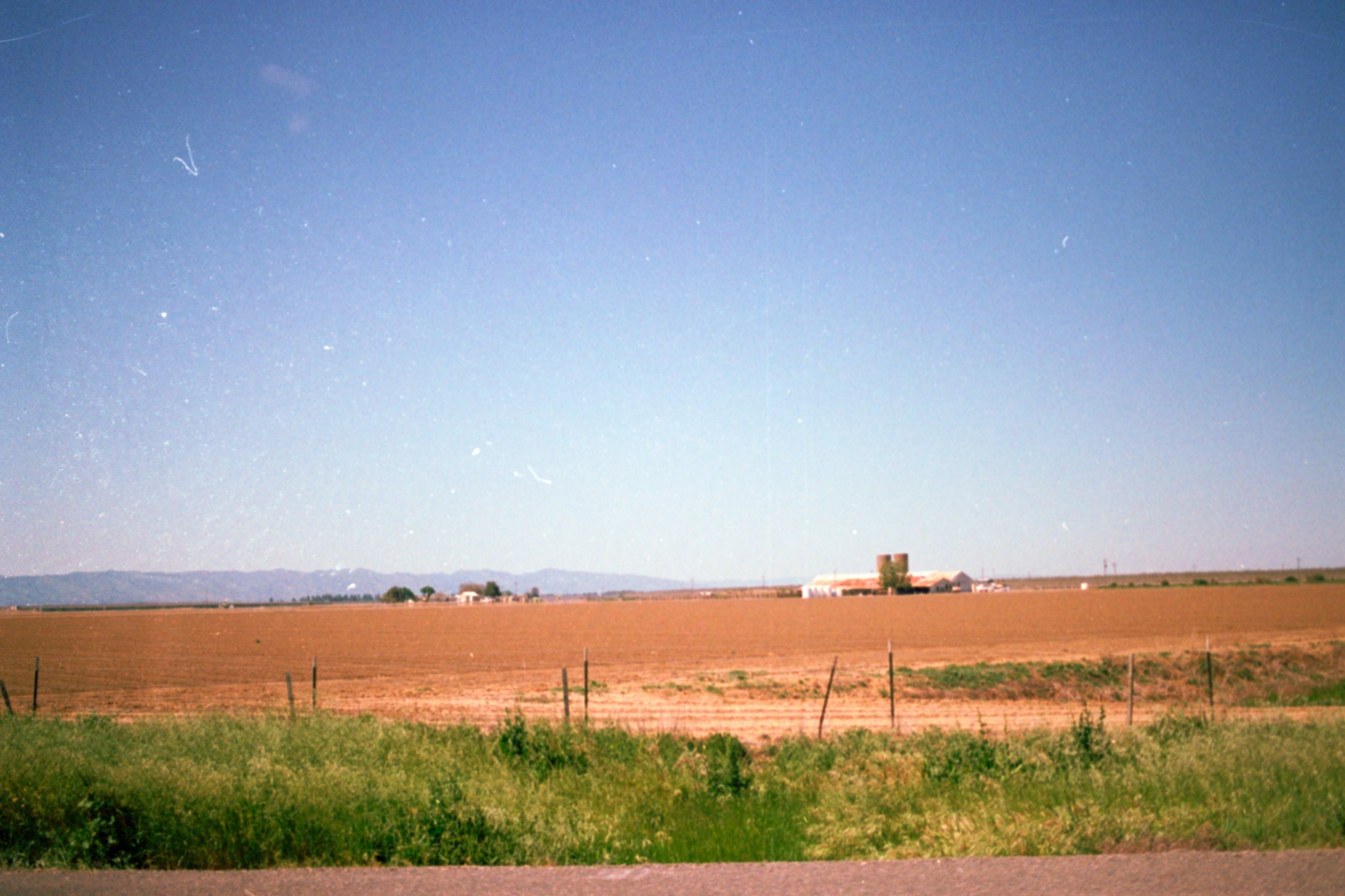
Finally, we were home in Michigan. I was grateful to be back in our state, my state — a place full of beautiful forests, lakes, and hills. There was solace in being back amongst living things and away from the barren landscapes of Indiana and Illinois, with their hundreds of miles of soybeans and feed corn interspersed with hardened, gray urban areas. As soon as we hit the state border, I rolled down my window and gulped in the fresh air, my lungs getting a much-needed bath after all that pollution I’d inhaled. I had been imagining my lungs were black as a smoker’s after that longer-than-an-hour rush hour in Gary — lungs like those that sat in formaldehyde at our community museum, their owner long dead from cancer.
I truly hated these trips to Missouri. They were long, and in my boredom, I had too much time to stew about things I disliked. During the year, at the school farm, we learned about the harsh corporate farming practices in the Midwest. Our counselors pointed out that there were few fields of vegetables and fruit trees, because in the Midwest, farmers had chosen to grow only soybeans and corn. Then there was all that fertilizer, weed killers, and insecticides. All were like poison. Why did we need so many soybeans? We never ate them, nor did anyone else we knew. And in science class, we learned that feed corn was bad for cows, that they needed to graze to be healthy. Yet, feed corn was everywhere in the Great Plains.
As we drove past endless miles of deforested farmland, I wondered… what kind of person thought it ok to chop down every last tree and plow under every meadow? Where did all the animals go that had lived there? And what about the native plants? Were there any left? It seemed to me, even as a child, that most farmers were selfish. They seemed unwilling to share. When they bought land, they considered it theirs and theirs alone, never mind all the other creatures on our planet, the ones who had no means to take out a mortgage. They were just shit out of luck.
In my superstitious child’s mind, I imagined something bad coming for these farmers, something of their own making, something like the Dust Bowl we had studied in our history lessons. Midwest farmers were contributing to the decline of the environment, and someday they would pay the price. This I knew.
And from what I could see, my stepmother, who had grown up on one of these farms, shared a similar attitude toward all things wild. She wanted everything to be controlled, predictable, and tidy, and for all creatures to be obedient. To her chagrin, I was none of these things. I was a wild animal that needed to follow its instinctual nature to thrive and she was scared of that, of me. She was jealous of my artistic and musical talents, though she pretended otherwise. She disliked my love of politics and my desire to watch the Watergate hearings, she disapproved of the way I parted my hair. But I never took any of this personally because she was stupidly afraid of everything, not just me — even the tiniest living things… spiders, frogs, snails, squirrels, mice, you name it. All animals were a threat to her, especially cats. She would not leave the house if, after looking out the living room window, a cat was within view. A critter-free world was the ideal world — one with beds of water-hogging annuals that blossomed all summer long, lush uniform lawns at an exactly 3.5” height, and tastefully manicured bushes. She aspired to live in a palatial mansion, a castle. In short, her ideal was Disneyland. It was surely just another, more beautiful and safe version of nature, right?
Back to that god-forsaken Midwestern landscape. One positive exception to its vast nothingness was the Amish communities. They were like tiny oases. Variegated fields of vegetables interspersed with thick groves of maple, oak, elm, and poplar trees were an indication we had entered another world, and softly pulsing through all this greenery were horse-drawn carriages and families traversing on foot. The slow pace was a relief, and there was much to enjoy in addition to the bucolic scenery, namely the Amish restaurants, with their hearty, home-cooked fare. If one had a hankering for chicken pot pie or pork and sauerkraut, it was important to plan one’s itinerary carefully, as restaurant hours were dictated by religious goings on and the rhythm of the daily farm chores. The 70s were Google-free, so it was anyone’s guess as to the actual business hours of these establishments, which also lacked Yellow Page listings and billboards. The few times our hungry tummies dovetailed with an open restaurant, it was a meal to remember, every delicious thing served family-style, and a seemingly endless supply of food. Usually, our timing was off, however, and we were relegated to Stuckey’s or Colonel Sanders.
This particular evening, on the drive back from Missouri, we’d missed our window of opportunity for Amish cuisine and Dad decided we would just keep going and get home. Since we’d be returning to a refrigerator that had been empty for three months, we swung by the Lucky Steer Steakhouse for dinner, a rare treat. I knew not to get my expectations up, as the usual routine was for my father and stepmother to order prime rib, while my brother and I were relegated to chopped “steak,” which was basically ground round with gristle thrown in for added texture. A thick layer of A1 Sauce improved the flavor, and the massive baked potato, which was loaded with butter and sour cream, did not disappoint.
When finally we landed at home, at nearly 10:00 p.m., chaos broke out. The house was musty and beds unmade, all the furniture covered in sheets. And there was all the unloading — a summer’s worth of clothes, bikes, pots and pans, canned food, linens, shoes, pool gear, and more. My stepmother was cranky and upset by our late arrival, chewing out my father for every last thing until he threw their suitcase down the steps from the landing, then stomped up to the bathroom and locked himself in. The tub could be heard running, which meant he would be in there for an hour, despite all of us needing to use the restroom. There was one other toilet in the house, in the corner of a dark, cobwebby room in the basement and it was no doubt dry as a bone on account of its leaking and not having been used for months.
I grabbed my little sister, she threw her legs around my waist and off we went to Doris’s, which was right next door. I said nothing to the parents — we just headed out, as I didn’t want to have to argue my case. My bladder, which was about to explode, was making all the decisions. Thankfully, the light was still on in Doris’ kitchen, and although the window was too high to see if anyone was there, we could hear the clanging of her washing pots and pans. There was life on Mars. Sheepishly, I knocked on the back door, and when she answered, asked if we could use her restroom, explaining that our father occupied ours and we really had to go. She was obliging, of course, and suggested we knew where it was, to just go help ourselves. The powder room was off the kitchen and Polish-Catholic-mama clean, and well-stocked with toilet paper, Kleenex, Q-tips, feminine hygiene products, and that nice-smelling Yardley soap. Doris went right back to her pile of dishes. She was used to having kids milling about. She’d had eleven children and now had over twenty grandchildren. We blended right in.
When done, we snuck quietly out the back door, crossed the side-by-side driveways, then entered the house through the back door, where we were confronted by my stepmother upon entering the kitchen. Hands on hips, she wondered why we hadn’t used the spare toilet in the basement. That was a rhetorical question, of course — she knew exactly why. That toilet was disgusting, the water rust-colored, and it never flushed properly. Also, it leaked, making the floor around the base slippery from mildew. Having to pee (or god forbid poop) on that toilet after three months of disuse would have meant making multiple trips down the steps with buckets of water to fill its leaky tank. Even then, it was a crapshoot as to whether the toilet would actually flush. And I don’t need to tell you… when you have to go, you have to go. I didn’t have time to deal with that, so it was off to Doris’s. I’d do that again in a heartbeat.
By the time beds were made and teeth brushed, it was nearly midnight. No time for bedtime stories tonight. For once, I was glad to be climbing under the covers, and in no time, I was fast asleep.
To read Surviving Darkness, Chapter 1, see Hole in the Floorboard